

The world is an open invitation, and for the adventurous soul, a new year brings a fresh canvas for exploration. Forget the well-trodden paths; the most rewarding journeys are those that challenge you, immerse you in unique cultures, and drop you into landscapes of breathtaking, untamed beauty. The coming years offer an unparalleled chance to lace up your boots and seek out experiences that transform a mere vacation into an epoch-defining adventure. This travel guide cuts through the noise to highlight 5 globally significant travel experiences that promise a blend of physical challenge, profound cultural immersion, and awe-inspiring natural splendor, ensuring your travel portfolio for the mid-2020s is anything but ordinary. So, let's dive in!
Are you ready to trade the tourist trail for true exploration?
The core of a truly unforgettable adventure lies in a journey that acts as a bridge between the past and the present, or a confrontation with nature's most magnificent creations. Our curated selection focuses on destinations that require not just a booking, but a commitment to experience the world on its own terms, often through trekking, deep exploration, and interaction with local life. Planning for such trips, particularly international expeditions, starts long before takeoff, and securing the logistics around your initial departure is crucial. For seamless transitions, many seasoned travelers rely on services like ParkingNearAirports.io, which helps organize essential pre-trip arrangements, ensuring that from the moment you leave your driveway to the moment you step onto the plane, everything is handled. Finding best airport parking deals – perhaps with a valued airport discount – and making sure you have reliable airport shuttle parking are logistical cornerstones that allow you to focus entirely on the grand journey ahead.
1. Nakasendo Trail and Kumano Kodo – Japan
Source: pen_ash/Unsplash
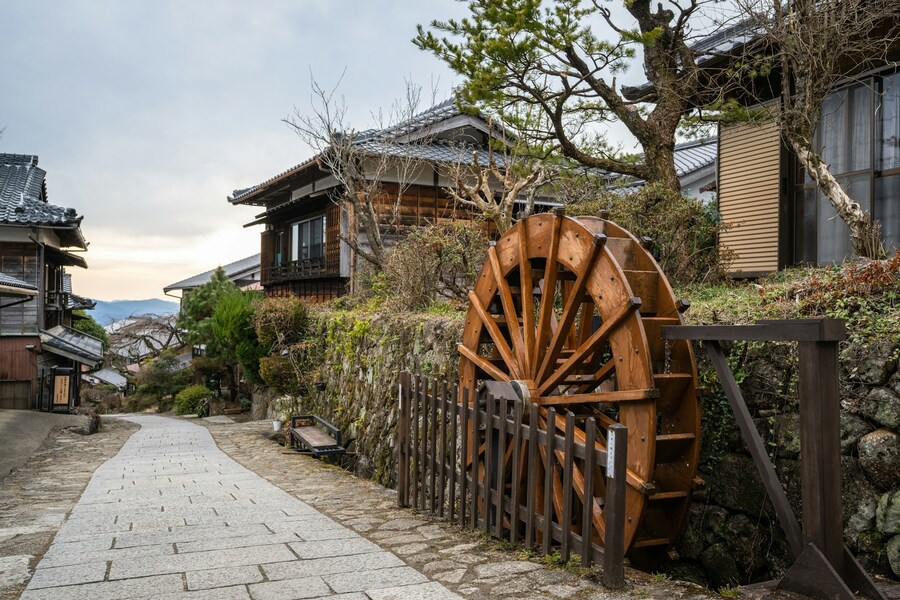
Japan, often lauded for its futuristic cities and tranquil gardens, holds within its mountainous spine ancient routes that whisper tales of samurai, emperors, and pilgrims. The Nakasendo Trail and Kumano Kodo offer two distinct, yet equally profound, walking adventures that explore the nation's spiritual and historical heartland.
The Nakasendo Trail, or "Central Mountain Route," was one of the five major roads of the Edo period, connecting Kyoto to Edo (modern-day Tokyo). It isn't a wilderness trek, but a journey through time, winding past preserved juku (post towns) like Magome and Tsumago. These towns maintain their Edo-era architecture, free from the blight of modernity, where traditional wooden buildings line cobblestone streets and offer glimpses into the life of travelling merchants and samurai hundreds of years ago. Walking the Nakasendo is a relatively gentle physical undertaking, focusing more on cultural absorption. You'll find yourself staying in authentic ryokans (traditional inns) and minshuku (guesthouses), where hospitality, known in Japan as omotenashi, elevates the entire experience. The path takes you through bamboo groves, over low mountain passes, and past small, quiet villages, providing a powerful contrast to the bustling metropolises that bookend the country.
In profound contrast, the Kumano Kodo is one of only two pilgrimage routes in the world designated as a UNESCO World Heritage Site (the other being the Camino de Santiago). Located in the lush Kii Peninsula, this collection of trails leads to the Kumano Sanzan, the three Grand Shrines of Kumano: Hongū Taisha, Nachi Taisha, and Hayatama Taisha. This is a far more spiritual and challenging experience than the Nakasendo, involving steeper climbs through dense, ancient cedar forests, often shrouded in mist. The trails are rugged, demanding, and utterly beautiful, leading to secluded onsen (hot springs) and the awe-inspiring Nachi Falls, Japan's tallest waterfall. The Kumano Kodo is a journey of introspection and physical endurance, where Shinto and Buddhist traditions have intertwined for over a millennium. Combined, these two trails provide a comprehensive view of Japan that extends far beyond the neon lights of the cities, revealing a soul rooted in history and deep spiritual reverence for nature.
2. Fjords and fjells of the Lofoten Islands – Norway
Source: SYLVAIN IBARRA/Unsplash
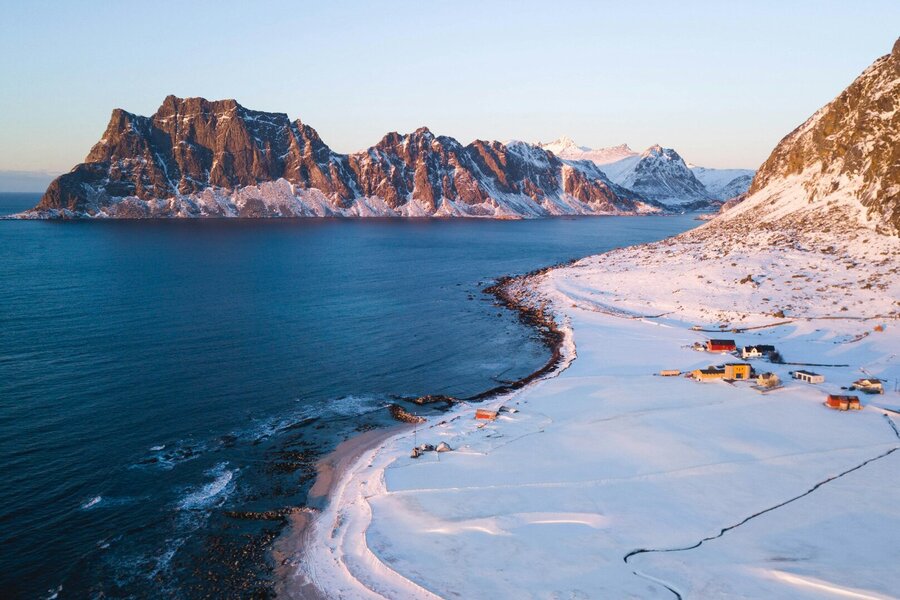
Above the Arctic Circle, the Lofoten Islands in Norway present a spectacle of raw, elemental beauty, where dramatic granite peaks, known as fjells, rise directly from the sea and plunge into deep, serene fjords. This archipelago is a hiker's and photographer's paradise, offering experiences that change fundamentally with the seasons.
In summer, the land is bathed in the ethereal light of the midnight sun, enabling extended hikes on the numerous trails. These range from coastal walks along white-sand beaches, such as Kvalvika Beach, to challenging ascents up iconic peaks like Reinebringen, which offers one of the most famous panoramic views in all of Norway – a vista over the red fishing huts of Reine and Hamnøy, framed by jagged mountains. The infrastructure, while remote, is welcoming. You'll stay in a charming rorbuer (converted fishermen's cabins) painted in traditional red and yellow, right at the water's edge. The outdoor activities are endless, encompassing kayaking in the still fjords, climbing the sheer rock faces, and deep-sea fishing.
The winter months, conversely, transform Lofoten into a snowy, quiet sanctuary. The hiking becomes more technical, often requiring specialized gear, but the reward is the potential sighting of the Aurora Borealis dancing across the polar sky. The dramatic light, even when not the Northern Lights, is moody and cinematic, illuminating the tiny fishing villages nestled between the powerful mountains. Regardless of the time of year, Lofoten is a testament to the staggering power of glacial forces, offering a sublime, challenging, and deeply northern European experience that strips away the unnecessary layers of modern life.
3. Wild wonders – Costa Rica
Source: Zdeněk Macháček/Unsplash
Costa Rica, the global poster child for ecotourism and conservation, is an adventure rooted in biodiversity. The journey here is less about one single epic trail and more about a collection of immersive walks through different ecosystems, each revealing an astonishing concentration of life. From the misty Monteverde Cloud Forest to the dense primary rainforests of the Osa Peninsula, this Central American nation is a living classroom.
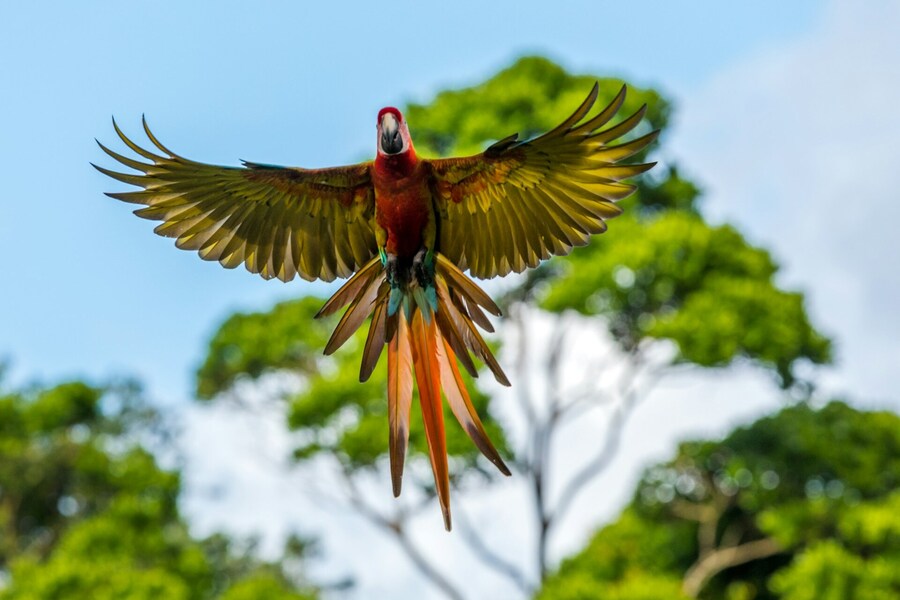
The experience is defined by exploring the vertical layers of the jungle. High up in the cloud forests, suspended walkways and zip lines allow you to navigate the canopy, a world teeming with orchids, mosses, and the elusive Resplendent Quetzal. The air is cool and wet, creating an atmosphere of primeval mystery. Moving down to the humid lowlands, the emphasis shifts to the rainforests of Corcovado National Park on the Osa Peninsula, which National Geographic famously called "the most biologically intense place on Earth." Here, guided treks are essential for spotting four species of monkeys, two types of sloths, Baird's Tapir, and the magnificent Scarlet Macaw, often glimpsed during their daily migrations.
A trip to Costa Rica should also include time on the water. Kayaking or taking boat tours along the canals of Tortuguero National Park offers a unique perspective on aquatic and riparian life, including manatees, caymans, and a spectacular array of wading birds. The national motto, Pura Vida – meaning "pure life" – is truly embodied in the travel experience, emphasizing a slow, respectful approach to enjoying nature. The walks are often punctuated by the incredible sounds of the jungle, and the accommodation, frequently in eco-lodges, reinforces a commitment to sustainability. This is an adventure that appeals to the inner naturalist, demanding patience and a keen eye for the vibrant, hidden world around you.
4. North to South – Vietnam
Source: Ruslan Bardash/Unsplash
To travel the length of Vietnam from Hanoi in the North to Ho Chi Minh City (HCMC) in the South is to undertake a comprehensive cultural and historical pilgrimage, a linear journey of contrast that moves from the ancient heartland to the modern, bustling delta. This trip is the ultimate road-based adventure, often undertaken by train, bus, or famously, by motorbike.
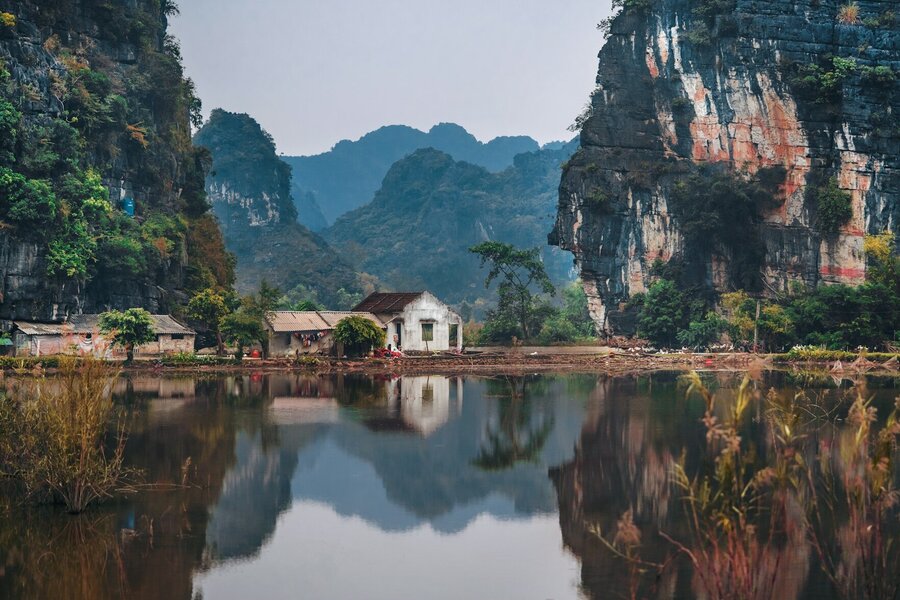
The northern starting point, Hanoi, is an intoxicating mix of old-world charm and dynamic urban life, centered around the Old Quarter and serene Hoan Kiem Lake. From here, the journey begins with an essential side trip to Ha Long Bay or the less-crowded Lan Ha Bay, where thousands of karst islands rise dramatically from the emerald waters. Southward, the landscape changes: you move through the mountainous regions of Ninh Binh, often called the "Ha Long Bay on land," before reaching the historical and spiritual center of the country in Central Vietnam.
The cities of Hue and Hoi A form the cultural cornerstone of this journey. Hue, the former Imperial capital, is rich with history, marked by the ancient Citadel and the tranquil Perfume River. Just down the coast, Hoi An is a beautifully preserved ancient trading port, famed for its yellow walls, custom tailoring, and the nightly spectacle of lanterns illuminating the Thu Bồn River. The final leg plunges into the energetic, modern chaos of HCMC, the economic engine of the country, where the history of the Mekong Delta and the vibrancy of southern Vietnamese culture take center stage. The food culture across the entire route is a constant highlight, from Hanoi's phở and bún chả to the regional specialties of Hue and the fresh seafood of the coast. Traveling North to South is a powerful narrative, connecting the diverse threads of a resilient and beautiful country through constantly evolving scenery and an unparalleled culinary landscape.
5. Annapurna Sanctuary and Poon Hill Trek – Nepal
Source: Zhenyu Ye/Unsplash
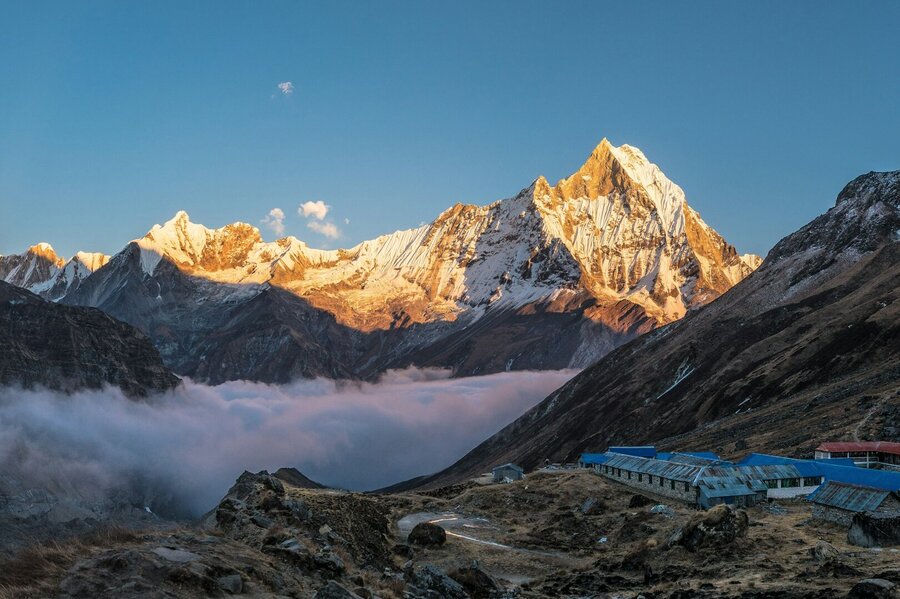
For those seeking a high-altitude mountain experience, the Annapurna Sanctuary and Poon Hill Trek in Nepal stands as an iconic and accessible Himalayan adventure. While other treks might reach higher elevations, this route offers one of the most stunning concentrations of massive peaks, culminating in the heart of the Annapurna range.
The journey typically begins in Pokhara, the gateway to the Annapurnas, and initially involves a moderate ascent through terraced fields and traditional Gurung and Magar villages. The early highlight is the climb to Poon Hill (3,210m/10,531ft). Reaching this viewpoint before dawn is a necessary ritual, rewarded by an unforgettable sunrise panorama over the Dhaulagiri and Annapurna ranges, including the distinct, sacred peak of Machhapuchhre (Fishtail Mountain).
Beyond Poon Hill, the trek deepens into the Annapurna Sanctuary, a high-glacial basin ringed by colossal mountains, including Annapurna I (the 10th highest peak in the world) and Annapurna South. The trail climbs through dense rhododendron and bamboo forests, eventually giving way to the alpine zone near Annapurna Base Camp (ABC) at 4,130m (13,550ft). The experience is one of profound scale, where you are dwarfed by the vertical rock and ice walls of the Himalayas. The trekking is challenging, requiring excellent physical conditioning and acclimatization to altitude, but the support network of teahouses – local lodges run by Nepali families – provides warm hospitality, simple yet fulfilling meals, and a genuine connection to the Sherpa and Gurung cultures. This trek is more than a physical challenge; it's an immersion in the spiritual landscape of the world's highest mountains.
The bottom line
These 5 destinations represent the pinnacle of adventurous travel, each offering a unique balance of challenge, cultural depth, and breathtaking natural scenery. Whether you are tracing the footsteps of Japanese pilgrims, confronting the raw power of the Arctic, tracking exotic wildlife in a Costa Rican cloud forest, traversing the historical spine of Vietnam, or standing humbled before the highest peaks of the Himalayas, your journey will undoubtedly be one of personal growth and unforgettable discovery. The key to maximizing these experiences lies in meticulous preparation and an open, respectful mindset. The world's great adventures are waiting, not just to be seen, but to be lived!


