
When you are mapping out an international vacation, it's easy to get caught up in the big-picture planning – booking flights, finding boutique accommodations, and organizing daily tours. Yet, the finest travel experiences are built on a foundation of smart financial decisions. Before you set foot on a plane, your budget is active. From managing your pre-departure overhead like airport car parking fees to deciding how you'll pay for transport when you land, every dollar saved is a dollar that can be spent on experiencing your destination. Navigating foreign currency exchange can be intimidating, but a strategic approach ensures you won't bleed cash before your trip begins. Managing currency conversion requires understanding how the global banking network operates, identifying where the worst financial traps are located, and leveraging modern digital tools. By taking control of your travel money, you ensure your funds go exactly where they belong: into making memories abroad.
Are You Unknowingly Bleeding Cash on Foreign Exchange Rates and Pre-Flight Fees?

Source: Jakub Żerdzicki/Unsplash
Understanding Exchange Rates and the Interbank Spread
To secure the best exchange rates, you must first understand how currency valuation works. When you look up a currency pair online, such as the U.S. Dollar (USD) to the Euro (EUR), you are shown the "mid-market rate" – the interbank rate. This is the real-time financial equilibrium point at which global banks trade currencies with one another, representing its truest value.
However, as an individual traveler, you'll almost never get this exact rate. Retail exchange providers, traditional banks, and card processors offer a "retail rate." The difference between the mid-market rate and the retail rate is known as the "spread" or margin. For example, if the mid-market rate of a foreign currency is 1.20 per dollar, a retail exchange kiosk might offer you 1.10. That difference is their built-in profit.
When exchange businesses advertise "zero percent commission," they are generally playing a marketing game. While they may not charge a flat fee, they simply widen their spread to bake their margin directly into an unfavorable conversion rate. Always use a reliable mobile converter app to compare the local cash desk's offered rate against the live interbank rate to ensure a fair deal.
The Pitfalls of Convenience: Where You Should Never Exchange Money
The golden rule of travel finance is simple: convenience is expensive. The absolute worst places to convert currency are high-traffic tourist zones, cruise terminals, hotel front desks, and airport exchange kiosks. Because these operations pay premium rent for high-visibility locations and cater to captive, unprepared audiences, they pass these astronomical costs on to you.
An exchange counter at an airport terminal can easily cost you 10% to 15% of your total exchanged volume through flat fees and abysmal spreads. This means if you exchange $1,000, you are essentially throwing away $100 to $150 before you walk out the door.
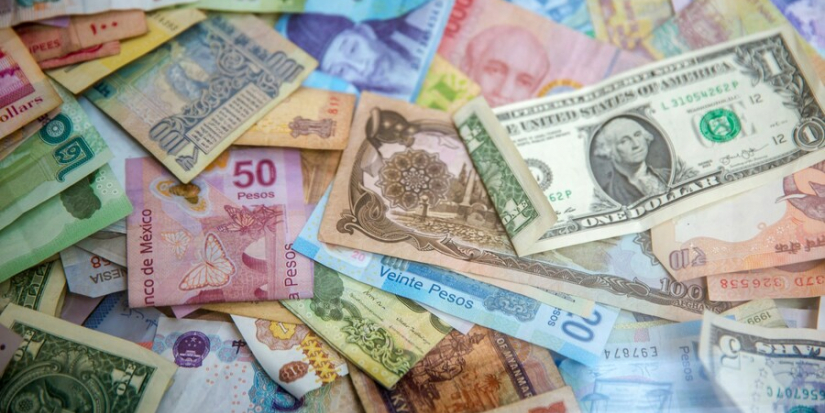
As you look at the visual above, notice the physical reality of handling high-denomination banknotes like Euros. Having a fan of crisp, local currency bills is incredibly useful for small merchants, open-air markets, and emergency tips. However, obtaining physical cash at a physical counter should be your last resort. If you find yourself in an absolute pinch abroad without a working card, skip the colorful tourist booths and find a legitimate, brick-and-mortar foreign bank branch, which will prominently display their rates and provide a transparent, detailed paper receipt.
How to Time and Order Cash Safely Before Departing
Advanced preparation saves you money and eliminates departure-day anxiety. If you prefer to touch down with local currency already in your pocket, the best route is to order it directly through your personal domestic bank or credit union before you leave.
Because you have an established relationship with your financial institution, most major banks waive flat processing fees for account holders. Moreover, because national banks buy currency in massive volumes, they pass highly competitive, narrow spreads to you. Popular currencies like Euros, British Pounds, or Canadian Dollars are often in stock at larger branches for same-day pickup. For less common currencies, allow three to five business days for your branch to secure the physical cash.
Don't carry your entire vacation budget in physical cash, as this poses an immense safety hazard if lost or stolen. Instead, carry enough physical cash to cover your first three days of expected on-the-ground expenses – typically between $300 and $500 worth of local currency. This will cover initial transit, tips, and meals before you locate a secure local ATM.
Source: Anne Nygård/Unsplash
Mastering the ATM Abroad and Evading the DCC Trap
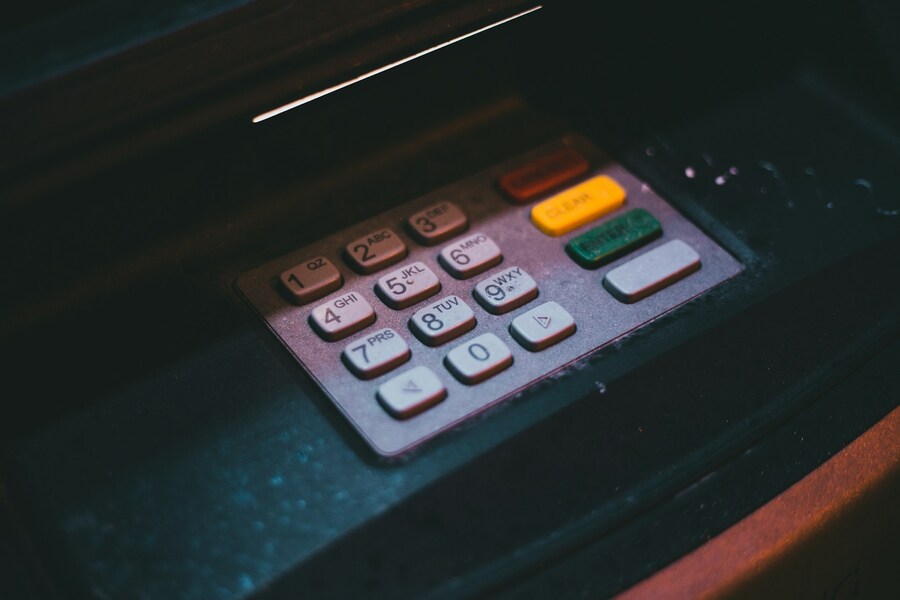
Once you've arrived, your best tool for obtaining cash is a local bank-affiliated ATM. ATMs pull currency directly from global networks, utilizing competitive wholesale exchange rates that are nearly impossible to match at any physical exchange desk. However, navigating international ATMs requires some tactical knowledge to avoid unnecessary fees and predatory practices.
First, you must understand and avoid the
Don't fall for this. Choosing your home currency permits the foreign ATM owner or local merchant to execute the conversion themselves using their own heavily inflated, arbitrary conversion rate, often adding a markup of up to 8% to 15%. By choosing to pay in the local currency, you force the transaction to go through your own card network, which guarantees a fair, standardized exchange rate. Always press 'NO' to decline the conversion or opt out of the USD choice.
In addition, only use ATMs physically located inside or attached to major banks during operating hours. Standalone ATMs in convenience stores or tourist plazas are operated by independent providers that charge exorbitant fees. To protect your budget further, notify your bank of your travel dates and destinations before departing so their fraud department doesn't freeze your cards.
Digital Wallets, Neobanks, and Multi-Currency Accounts
The landscape of global travel finance has evolved with digital-first banking and multi-currency platforms. Traditional banking institutions often tack on a "foreign transaction fee" – typically 1% to 3% – every single time you swipe your card outside of your home country. While this sounds like a small margin, it quietly drains hundreds of dollars over a multi-week vacation.
To bypass this, look toward digital neobanks and dedicated multi-currency accounts, such as Wise, Revolut, or Chime. These platforms allow you to set up digital sub-accounts in multiple global currencies. You can instantly convert funds from USD to Euros, Yen, or British Pounds at the exact mid-market rate with nominal, transparent fees clearly stated upfront.
Moreover, these platforms integrate with smartphone digital wallets. In major metropolitan hubs across Europe, Asia, and Oceania, contactless mobile payments are practically universal. From public transit turnstiles to street food stalls, you can tap your phone to pay directly from your pre-converted local currency balance, avoiding foreign transaction fees entirely. Keeping a primary card that waives foreign transaction fees alongside a digital multi-currency backup is the ultimate modern setup.
Recovering Budget Leaks Through Smart Airport Parking Logistics
Optimizing your international travel budget isn't just about chasing a slightly better exchange rate on the ground; it's about looking at your entire journey holistically. Too many travelers meticulously plan their currency exchange to save $50, only to turn around and throw away hundreds of dollars on unmanaged domestic logistics before their flight even departs.
One of the most common budget leaks occurs right at the departure terminal. Leaving your vehicle in premium, airport-owned parking lots will quickly rack up massive, non-negotiable airport car parking fees. These high drive-up rates are inflated due to terminal proximity, and they can severely impact your spending power before you even clear security.
To reclaim these funds and maximize your vacation capital, look toward off-site parking solutions instead. Reserving a secure space at a specialized facility offering parking near airport with shuttle services is a highly effective way to slash your pre-trip overhead. These off-site lots operate secure, fenced, and monitored parking options that cost up to 70% less than official airport rates. When you book, a complimentary, dedicated shuttle picks you up directly at your vehicle and deposits you right at your terminal's check-in gate, removing the stress of navigating crowded on-site parking structures.
To maximize these savings even further, you can utilize digital airport coupons to receive exclusive discounts on your reservation. By combining these promotional deals with the inherently lower rates of off-site lots, you save enough money to easily cover several dinners, museum passes, or a substantial portion of your physical cash exchange during your trip.
Conclusion
Source: Erik Mclean/Unsplash
Securing the best foreign exchange rates is entirely a matter of planning ahead and avoiding high-convenience traps. By ordering a small amount of cash from your local bank before departure, relying on bank-affiliated ATMs, avoiding the deceptive Dynamic Currency Conversion (DCC) trap, and using fee-free credit cards, you can keep your currency conversion costs incredibly close to the true mid-market rate.
However, a truly optimized travel budget starts long before you reach the international arrivals gate. By managing your domestic travel logistics wisely, you ensure that your hard-earned funds are spent on experiences rather than unnecessary overhead. To start your journey on the right financial foot, utilize our reservation system at ParkingNearAirports.io. Booking through our reservation system gives you instant access to the most competitive off-site parking rates, reliable shuttle services, and exclusive airport coupons to maximize your savings. Secure your spot today, eliminate departure-day stress, and protect your travel budget from the very start.


