

Picture this common travel scenario: You meticulously plan your upcoming trip, book your flights weeks in advance, and pack your bags. But when you complete online check-in and download your digital boarding pass, your eyes scan down to the seat field only to read four nerve-wracking words: "Seat Assigned at Gate." Instant panic sets in. Does this mean you don't actually have a seat? Will you be left stranded at the terminal while other passengers board? Or is this simply a routine operational procedure?
Understanding how airlines manage flight inventory can transform a stressful travel day into a smooth, predictable journey. From navigating basic economy restrictions to timing your arrival at the terminal, mastering pre-flight logistics is essential for modern travelers. Just as securing favorable airport long-term parking rates in advance through our reservation system at ParkingNearAirports.io removes ground-level travel friction, knowing how gate seat assignments work empowers you to take control of your itinerary. In this comprehensive guide, we demystify the mechanics behind gate-assigned seating, analyze your risk of being bumped, and provide actionable logistics strategies to ensure your next flight goes off without a hitch.
Decoding 'Seat Assigned at Gate': How Airlines Manage Seat Inventory, Overbooking, and Boarding Pass Logistics
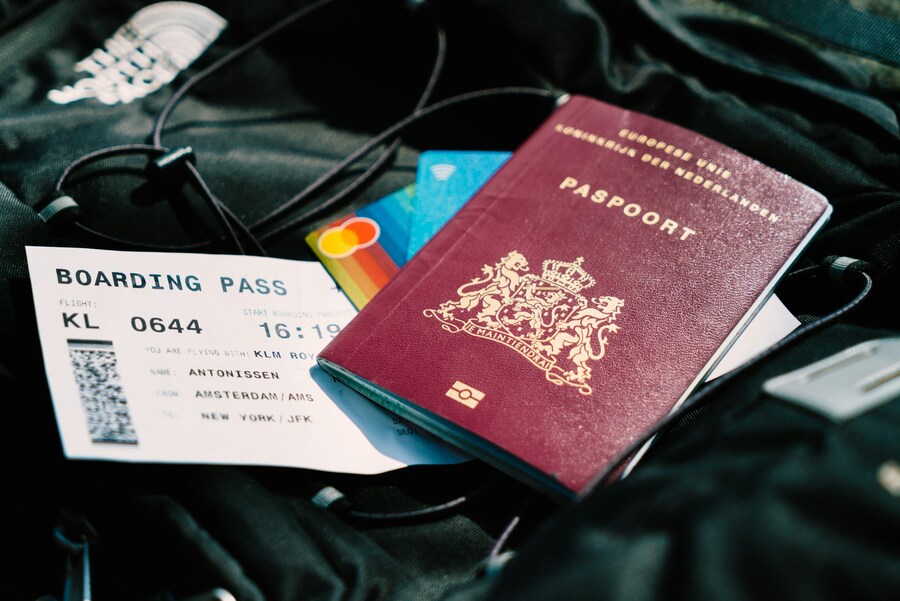 Source: CardMapr.nl/Unsplash
What 'Seat Assigned at Gate' Actually Means for Your Ticket Status
When your boarding pass displays "Seat Assigned at Gate" (sometimes abbreviated as SAAG on airline slips), it indicates that while you hold a confirmed reservation on the flight, a specific physical chair hasn't yet been locked into the computer system under your name. Contrary to common passenger panic, receiving this message doesn't automatically mean you are on standby.
A standby passenger is someone without a guaranteed seat who is hoping an empty chair opens up due to missed connections, cancellations, or last-minute passenger changes. In contrast, if you purchased a confirmed ticket – even a non-refundable Basic Economy fare – you are a ticketed passenger with a confirmed space on the aircraft.
Airlines utilize gate seat assignments for several operational reasons:
- Unallocated Basic Economy Inventory. Modern carriers offer discounted fares that strip away complimentary advance seat selection. The system deliberately holds back seat assignments until check-in or gate departure.
- Operational Holds. Gate agents reserve specific rows – often including bulkhead seats, exit rows, and accessible seating – to accommodate passengers with disabilities, families requiring adjacent seats, or elite loyalty members requesting late upgrades.
- Equipment Swaps. If an airline switches the scheduled aircraft to a different model or configuration shortly before departure, automatic seat assignments may reset, pushing unassigned passengers to gate processing.
- Overbooked Flights. When an airline sells more tickets than available seats anticipating no-shows, late-checking passengers are held in a buffer queue until the final manifest clears.
The Hidden Economics of Basic Economy and Digital Seat Maps
To understand why gate assignments occur so frequently today, one must examine the unbundling of airline pricing structures over the past decade. The introduction of Basic Economy revolutionized revenue management across major legacy carriers. Under this pricing model, airlines sell the core transport service at a lower baseline price while charging ancillary fees for extras like checked bags, priority boarding, and advance seat selection.
When you view an interactive seat map online 24 to 48 hours before departure, you might see every single seat shaded grey or marked as unavailable. This visual representation can be deeply misleading. A "full" seat map rarely means the airplane has reached physical capacity. Instead, it reflects that all complimentary seats allocated for advance selection have been taken, leaving only premium seats (such as extra legroom or preferred front-row positions) or operational hold seats remaining.
Airlines restrict automated systems from assigning these premium or held seats to Basic Economy ticket holders for free prior to departure. System algorithms prefer to wait until the gate agent takes control of the flight manifest roughly 60 minutes before pushback. At that juncture, the agent releases unallocated standard, preferred, or exit-row seats to fill remaining unassigned confirmed passengers without charging extra fees.
Overbooking Realities and Evaluating Your Risk of Involuntary Bumping
 Source: Markus Winkler/Unsplash
The primary source of anxiety tied to gate-assigned seating is the fear of involuntary denied boarding, commonly known as being "bumped." Overbooking is a standard legal practice in the aviation industry designed to maximize revenue and offset statistical no-show rates. However, understanding how airlines prioritize passengers during overbooked scenarios helps you assess your actual risk level.
When a flight is genuinely overbooked and every confirmed passenger shows up at the gate, airlines follow a structured protocol mandated by federal transportation guidelines. Before anyone is forced off a flight, gate agents must solicit volunteers willing to give up their seats in exchange for compensation, such as travel vouchers, cash payouts, or hotel accommodations.
If insufficient volunteers step forward and involuntary bumping becomes necessary, airlines rely on automated internal hierarchies to determine who stays grounded. Passengers holding "Seat Assigned at Gate" boarding passes are statistically more vulnerable than passengers with pre-assigned seats, but seat status is only one factor in the algorithm. Airlines also evaluate:
- Passenger Loyalty Status: High-tier frequent flyers are almost never bumped involuntarily.
- Fare Class and Ticket Value: Passengers holding higher-yield tickets receive priority over deeply discounted fares.
- Check-In Timestamp: The exact time you check into the flight plays a massive role; earlier check-ins receive higher priority.
- Special Assistance Needs: Unaccompanied minors, passengers with disabilities, and traveling families are protected from involuntary denial of boarding.
If you are involuntarily bumped, Department of Transportation (DOT) regulations require the airline to provide written documentation of your rights and offer substantial cash compensation depending on your delay length, unless the bump stems from a mechanical aircraft downgrade.
Proactive Strategies to Secure Your Seat Assignment Early
While waiting for a gate assignment can test your patience, travelers aren't entirely powerless. By implementing strategic pre-flight techniques, you can significantly increase your chances of securing a comfortable seat long before the boarding process begins.
- Set a 24-Hour Check-In Alarm. Check-in opens exactly 24 hours prior to departure for most major airlines. The timestamp of your check-in dictates your place in the operational queue. Checking in the precise second the window opens moves you up the priority ladder for unassigned seat allocation.
- Continually Monitor the Mobile App. Airline mobile applications update seat maps in real time as upgrades clear and connections shift. Reopening the app periodically between check-in and departure may reveal newly opened standard seats that you can claim free of charge.
- Approach the Gate Agent Early with Courtesy. Once you pass through airport security, proceed directly to your departure gate. Arrive before the gate agent begins the active boarding call – typically 45 to 60 minutes before departure. A polite, respectful inquiry regarding your seat assignment allows the agent to process your request calmly before the main boarding rush begins.
- Consider Paid Seat Options or Upgrades. If traveling together as a couple or family is essential, weigh the cost of paying a nominal fee for a remaining preferred or stretch-legroom seat during online check-in. This eliminates uncertainty entirely.
Master Your Travel Logistics: From Parking Near Airports to Gate Arrival
Navigating a "Seat Assigned at Gate" scenario successfully hinges on one critical factor: flawless time management. When your seating status is uncertain, arriving at the departure gate late can result in your seat being reallocated to a standby passenger or losing your spot in the check-in queue priority. Seamless pre-flight execution begins long before you reach the TSA security checkpoint – it starts at your home or office with smart ground transport logistics.
Driving your personal vehicle to the terminal offers convenience, but hunting for an open spot in sprawling, overcrowded airport garages burns precious minutes, inducing unnecessary stress. Utilizing off-site parking facilities is the secret weapon of seasoned travelers who want to enjoy airport parking for less without sacrificing peace of mind or departure buffer time.
By leveraging our reservation system at ParkingNearAirports.io, you can browse verified, secure off-site parking options near your terminal, compare real-time rates, and secure a guaranteed spot in advance. Doing so completely eliminates terminal parking uncertainty, allowing you to drive straight to a designated lot where fast, complimentary shuttles drop you off directly at your terminal entrance. Moreover, taking advantage of a seasonal airport parking promotion allows you to preserve your travel budget while gaining the crucial time buffer needed to navigate security lines and address your seating status with the gate agent.
A well-structured travel timeline for gate-assigned flights looks like this:
- 3 Hours Before Departure. Arrive at your pre-booked off-site parking facility, park effortlessly, and board the immediate shuttle.
- 2.5 Hours Before Departure. Check in bags if necessary and pass through TSA security comfortably.
- 60 Minutes Before Departure. Arrive at the gate podium, check in with the gate agent to confirm your presence, and monitor the departure lounge display screens for your name.
Conclusion
 Source: Oleg Laptev/Unsplash
Seeing "Seat Assigned at Gate" on your boarding pass can trigger initial anxiety, but understanding airline logistics reveals that it's usually a routine operational procedure rather than a travel catastrophe. By knowing how basic economy inventory functions, understanding overbooking protections, and executing early check-in practices, you can navigate gate assignments with total confidence.
Smooth air travel requires controlling the variables within your reach. While you cannot always control airline seat algorithms, you can fully control your ground logistics. Partner with our reservation system at ParkingNearAirports.io to secure premium off-site parking, lock in competitive airport long-term parking rates, and enjoy prompt shuttle service straight to your terminal. Reserve your parking spot today and start every trip with zero stress and total peace of mind!


