

There's something profoundly humbling about standing under a vast, ink-black sky and witnessing the silent, silver streak of a shooting star. While many of the world's most breathtaking natural wonders require expensive tickets, arduous hikes, or complex logistics, the celestial theater remains accessible to anyone with a patch of dark sky and a bit of patience. The upcoming year promises a remarkable sequence of astronomical events, ranging from the reliable favorites that return every August to rare, unpredictable "storms" that could see the heavens ignited with a hundred flashes of light every single hour.
Planning a trip to a certified Dark Sky Park or a remote coastal lookout can turn a simple observation into a life-changing adventure. Whether you're a seasoned astrophotographer with a tripod and a wide-angle lens or a family looking to share a magical midnight moment on a picnic blanket, knowing exactly when to look up is essential. This travel guide provides a comprehensive roadmap to the year's most significant meteor showers, detailing peak times, lunar interference, and the best ways to ensure you don't miss a single spark of cosmic dust.
So, how to plan your celestial road trip?
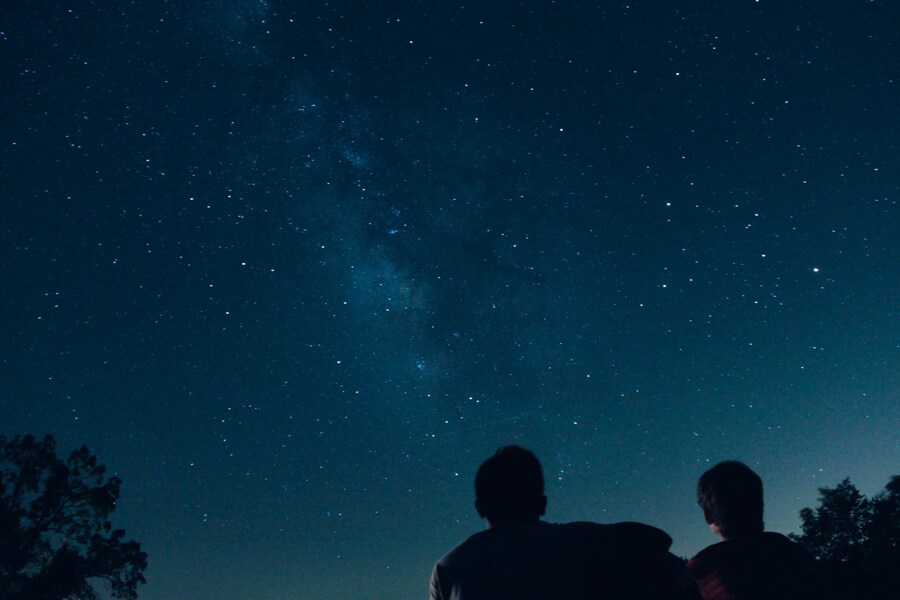 Source: Ryan Jacobson/Unsplash
Before diving into the specific dates, it's worth considering the logistics of a stargazing excursion. The best views are always found far from the "sky glow" of major metropolitan areas. If you're flying to a destination known for its clear skies – perhaps the deserts of the Southwest, the mountains of the Canary Islands, or the rugged coastlines of Iceland – managing your travel details efficiently is key.
To keep your focus on the stars rather than your logistics, you can look into services like ParkingNearAirports.io, which helps travelers find affordable and secure spots for their vehicles. When booking your trip, searching for domestic airport parking early can save you significant time. Many travelers also look for an airport parking promo to reduce the cost of extended trips, ensuring that high airport parking rates don't eat into their travel budget. Once the car is settled, you can head to the terminal and prepare for a journey that ends with your eyes fixed on the constellations.
April 15-29: the Lyrid meteor shower
The spring sky awakens with the Lyrids, a shower that has been observed for over 2,700 years. These meteors are the remnants of Comet Thatcher, a long-period comet that takes about 415 years to orbit the Sun. While the average rate is a modest 10 to 20 meteors per hour, the Lyrids are famous for their "outbursts." Occasionally, the Earth passes through an unexpectedly dense patch of debris, causing the rate to spike toward 100 meteors per hour.
In 2026, the peak occurs on the night of April 21 and the early morning of April 22. The viewing conditions are nearly perfect this year; a slim waxing crescent moon will dip below the horizon shortly after midnight. This leaves the prime pre-dawn hours – when the radiant point in the constellation Lyra is highest – in complete darkness. Keep an eye out for "Lyrid fireballs," which are exceptionally bright meteors that can cast brief shadows on the ground.
April 15-May 27: the Eta Aquariids meteor shower
Originating from the most famous comet of all, Halley's Comet, the Eta Aquariids are known for their incredible speed. These particles slam into the Earth's atmosphere at roughly 148,000 miles per hour, often leaving "trains" or glowing wakes that last for several seconds.
The peak falls on the morning of May 6. This year, the moon poses a significant challenge, as a bright lunar disk will wash out all but the most brilliant fireballs. For those in the Southern Hemisphere, the show remains spectacular due to the higher elevation of the radiant near the star Eta Aquarii. Northern observers will need to be more patient, focusing on the eastern horizon just before twilight begins to catch these swift streaks.
July 3-Aug. 15: the Alpha Capricornids shower
While many showers prioritize quantity, the Alpha Capricornids are all about quality. They are famous for producing slow, bright, yellow fireballs that seem to crawl across the sky. These meteors are fragments of Comet 169P/NEAT.
The peak on July 31 coincides with a nearly full moon, which is unfortunate for general stargazing. However, because the Alpha Capricornids are exceptionally bright, they can often cut through the moonlight. This shower is a great "bonus" event while waiting for the more prolific showers of late summer to begin.
July 12-Aug. 20: the Southern Delta Aquariids meteor shower
Best viewed from the Southern Hemisphere or the southern latitudes of the Northern Hemisphere, this shower provides a steady stream of about 25 meteors per hour during its peak on July 30. Like the Capricornids, the Southern Delta Aquariids will face stiff competition from a 98% illuminated moon this year. To see them, it's best to find a location where a physical barrier – like a mountain or a building – blocks the direct light of the moon while leaving the southern sky open to view.
July 14-Sep. 1: the Perseids meteor shower
The Perseids are often considered the "king" of meteor showers for casual observers. Not only does the peak occur during the warm summer nights of August, but the meteors are consistently plentiful and bright. In 2026, the conditions are arguably the best they have been in years. The peak on August 12-13 occurs during a new moon, providing the ultimate dark-sky canvas.
Under these conditions, you can expect to see between 50 and 75 meteors per hour. Moreover, a total solar eclipse will occur on August 12, passing over Spain, Iceland, and Greenland. Travelers in these regions might witness the surreal sight of Perseids appearing during the daytime darkness of totality, a truly once-in-a-lifetime astronomical double-header.
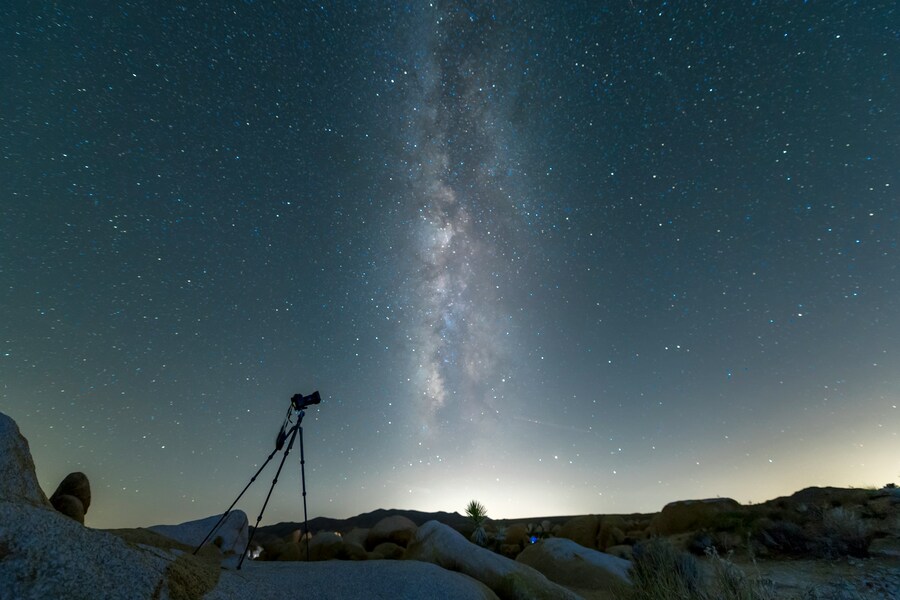
Source: Ken Cheung/Unsplash
Oct. 6-10: the Draconids meteor shower
Most showers are best viewed after midnight, but the Draconids are a rare exception that favors the early evening. The radiant point in the constellation Draco is highest just as night falls. While usually a quiet shower with about 10 meteors per hour, the 2026 crossing is generating excitement among astronomers. There's a possibility that Earth will encounter a denser filament of debris from Comet 21P/Giacobini-Zinner, potentially triggering a "meteor storm" with hundreds of sightings per hour. With a thin crescent moon setting early, the stage is set for a potential surprise.
Sep. 26-Nov. 22: the Orionids meteor shower
The second annual gift from Halley's Comet arrives in October. The Orionids are known for being particularly fine and fast. The peak on October 23 will be partially obscured by a 93% illuminated moon, but there's a silver lining. The moon sets a few hours before dawn, providing a window of "true dark" just as the constellation Orion reaches its highest point in the sky. If you can wake up at 4:00 AM, you may be rewarded with 20 meteors per hour trailing through the most beautiful part of the winter sky.
Sep. 23-Dec. 2: the Taurids meteor shower
The Taurids are a complex, long-lasting event divided into North and South components. They are often called "Halloween Fireballs" because of their tendency to produce large, bright meteors in late October and early November. While the rate is low (about 10 per hour), the Taurids are unique because they are composed of heavier material than most showers. Instead of tiny dust grains, Earth hits pebbles that create brilliant, long-lasting flares. In 2026, the new moon on November 9 ensures that even the faintest of these "fireballs" will be visible.
Nov. 3-Dec. 2: the Leonids meteor shower
The Leonids are the stuff of legend, responsible for the greatest meteor storms in history. While we are currently in a quiet period of the 33-year cycle of Comet 55P/Tempel-Tuttle, the shower still produces 15 to 20 very fast meteors per hour. The peak on November 17-18 will be slightly affected by a first-quarter moon, but since the radiant in Leo doesn't rise until late, the moon will have set by the time the best viewing begins.
Dec. 4-Dec. 20: the Geminids meteor shower
If the Perseids are the most popular shower, the Geminids are arguably the most reliable. These meteors are unique because they originate from an asteroid, 3200 Phaethon, rather than a comet. This makes the particles denser, allowing them to burn longer and sometimes show hints of color like yellow, blue, or green.
The peak on December 13-14, 2026, is set to be spectacular. With the moon being a mere waxing crescent that sets early, you'll have a dark sky to witness the year's highest rates – often exceeding 100 to 120 meteors per hour. Because the radiant rises early in the evening, this is a fantastic event for families with children who may not be able to stay up until the pre-dawn hours.
Dec. 13-Dec. 24: the Ursids meteor shower
The final event of the year is the Ursids, which peak on the Winter Solstice, December 21-22. While usually a minor shower of 10 meteors per hour, the Ursids have a history of surprise outbursts. A nearly full moon will make viewing difficult in 2026, so only the brightest meteors will be visible. However, for those standing out in the crisp December air, the sight of a lone meteor streaking past the Little Dipper is a perfect way to close out the astronomical year.
Conclusion
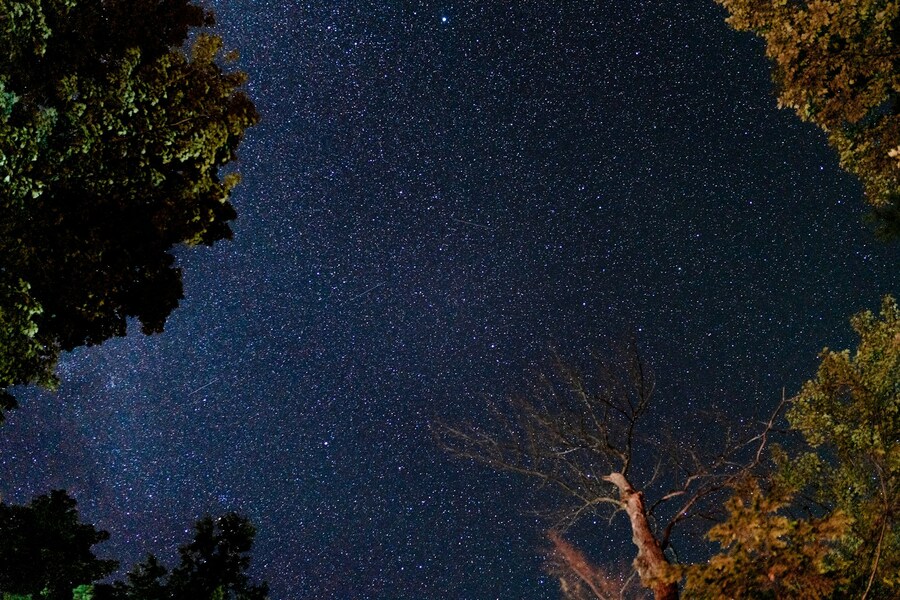
Source: Nikhil Mitra/Unsplash
The 2026 calendar is a masterclass in celestial timing. From the moonless peaks of the Perseids and Geminids to the potential for a rare Draconid storm, there are ample opportunities to reconnect with the cosmos. Watching a meteor shower requires no special equipment – only a willingness to slow down and look up. By choosing a dark location, checking the weather, and planning your travel logistics in advance, you can ensure that the only thing you'll be worried about is how many wishes you've prepared. We wish you clear skies for the best possible views and tailwinds to get you to your destination swiftly. May your journey be as bright as the stars you're traveling to see!


