

Imagine driving along a bustling East Coast highway early in the morning, watching the clock tick down toward your scheduled flight departure. You pull into a brightly lit service station, open your car door, and instinctively reach out for the gasoline nozzle – only to hear a station attendant calling out across the lot for you to stop immediately. If you happen to be traveling through New Jersey on your way to catch a flight, touching that pump isn't just a minor breach of local driving etiquette; it's explicitly prohibited by state law. While drivers across virtually every other corner of North America take self-service refueling completely for granted, the Garden State maintains a strict legal ban that leaves out-of-state motorists thoroughly baffled. For savvy travelers organizing domestic airport parking, navigating regional rental car drop-offs, or embarking on interstate road trips, understanding these unique regional road rules is essential to avoiding unexpected civil fines, managing travel delays, and keeping your overall journey running seamlessly.
Could a $500 Fueling Fine and Unexpected Delays Ruin Your Next Flight?
 Source: P C/Unsplash
The Historical Roots of New Jersey's Full-Service Gasoline Mandate
To understand why New Jersey stands alone as the final holdout against self-service gasoline, one must look back to the middle of the 20th century. What feels like an archaic quirk to modern drivers was once standard practice across the United States. For decades, full-service gas stations staffed by uniform-clad attendants were the bedrock of American automobile culture. However, as technology advanced and economic pressures shifted, state after state repealed their mandatory full-service mandates – with one notable exception. The legal foundation of New Jersey's unique refueling culture dates back to the passage of the Retail Gasoline Dispensing Safety Act of 1949. The statute explicitly outlined the legislative intent behind the restriction, stating that because of the fire hazards directly associated with dispensing fuel, it was deemed in the public interest that station operators maintain exclusive control over that activity.
While the official legislation framed the ban as a critical fire safety initiative, the underlying catalyst was deeply rooted in local business competition. In the late 1940s, an aggressive Bergen County entrepreneur named Irving Reingold opened a pioneering self-service gas station on Route 17 in Paramus. Reingold offered discounted gasoline to customers who were willing to pump their own fuel. His low pricing strategy proved enormously popular with budget-conscious motorists, but it deeply threatened competing traditional station owners across the region. Fearing that massive oil corporations would build high-volume self-service stations along major travel corridors and drive independent station operators out of business, rival owners joined forces. They successfully lobbied the state legislature to enact a blanket ban on driver-dispensed fuel under the umbrella of public safety.
Throughout the mid-20th century, New Jersey was far from alone in its restrictive policies. As late as 1968, 23 states still prohibited drivers from handling gas nozzles. However, between the early 1970s and 1992, rapid economic shifts accelerated the nationwide adoption of self-service facilities. The percentage of self-service stations exploded from just 8% to 82% across the country during that period. Yet, as 49 other states eventually modernized their statutes, New Jersey's 1949 law remained firmly intact.
Cultural Identity, Political Realities, and the Oregon Precedent
Over the following decades, New Jersey's refueling ban transformed from a simple business regulation into an iconic pillar of state identity. The phrase "Jersey Girls Don't Pump Gas" evolved into a widespread cultural slogan emblazoned on bumper stickers and souvenirs sold across the state. Public opinion data consistently reinforces how deeply entrenched this preference remains among local residents. A landmark Monmouth University poll revealed that 60% of New Jersey residents expressed firm opposition to eliminating full-service requirements at retail stations. Polling analysts noted that being the last full-service-only state in the nation became a genuine source of civic pride for many New Jerseyans. Consequently, state politicians view the law as high-risk legislative territory, with governors famously referring to the topic as a political third rail that elected officials are hesitant to touch.
Legislative challenges emerge periodically, particularly when global economic shifts or sudden spikes in crude oil prices force conversations around station operating overhead. In early 2025, state lawmakers introduced fresh proposals designed to grant drivers the option to choose between self-service and full-service pumps. The proposed legislation mandated that stations featuring 4 or more pumps retain full-service lanes while keeping attendants available for elderly drivers or individuals with disabilities. Despite these flexible accommodations, political resistance remains formidable, leaving the status of mandatory assistance largely unchanged.
For many years, New Jersey shared its unique full-service status with Oregon, which passed a remarkably similar ban in 1951. However, the West Coast state broke rank when Oregon lawmakers enacted House Bill 2426, officially ending its 72-year restriction on self-service refueling. Oregon's legislative compromise offered a compelling blueprint for how full-service states can transition without completely abandoning customer convenience. By capping self-service at half of a station's available pumps and outlawing price surcharges for attendant assistance, Oregon preserved access for drivers who prefer full service while granting modern flexibility to out-of-state travelers. New Jersey's continued refusal to adopt a similar hybrid model leaves it as the single solitary jurisdiction in the United States where touching a gas pump can result in civil fines ranging from $50 to $500 per offense.
Pre-Flight Refueling Logistics for Newark, Philadelphia, JFK, and LaGuardia
 Source: Jimmy Woo/Unsplash
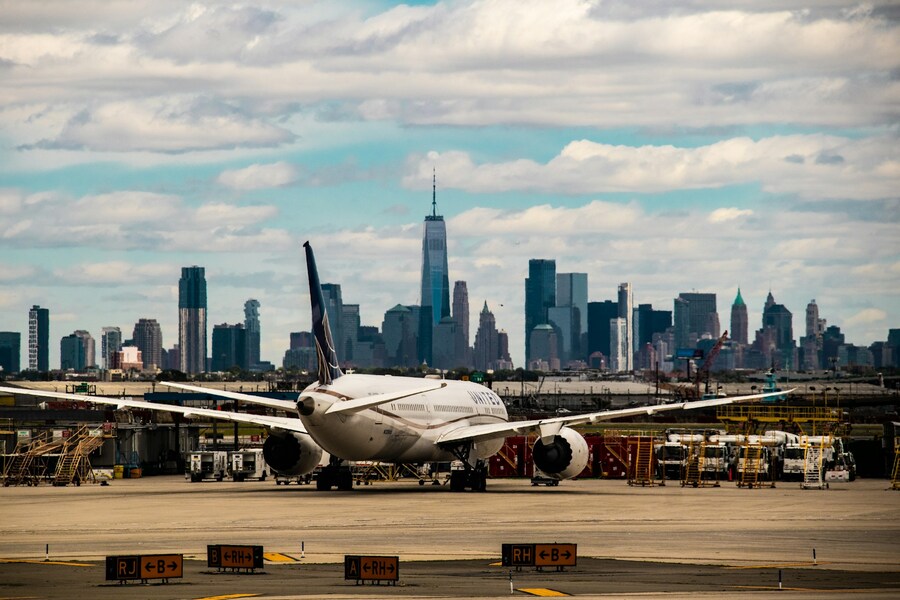
For travelers driving through major East Coast transportation hubs – specifically Newark Liberty International Airport (EWR), Philadelphia International Airport (PHL), John F. Kennedy International Airport (JFK), or LaGuardia Airport (LGA) – New Jersey's fueling laws introduce crucial logistical variables that must be calculated into your itinerary. If you return a rental vehicle to Newark Liberty International with an empty tank, rental agencies will charge exorbitant per-gallon refueling fees that often double or triple local market rates. To avoid these punitive costs, drivers frequently plan a quick fuel stop right before entering the airport perimeter. However, because New Jersey stations operate under mandatory full service, you cannot simply step out, swipe your credit card, and speed through a 3-minute refuel. During peak travel windows, short-staffed stations near major highway corridors can experience noticeable wait times as a single attendant manages multiple pump lanes. Failing to budget an extra 15 to 20 minutes for an attendant-driven fuel stop can quickly jeopardize your check-in schedule.
Moreover, travelers driving across state lines between Pennsylvania, New York, and New Jersey must adapt rapidly to shifting legal expectations. When entering New Jersey from New York or Pennsylvania, you must step away from the pump and remain inside your vehicle while an attendant handles the transaction from start to finish. Conversely, when exiting New Jersey into neighboring states, self-service is the default expectation at virtually every station. When refueling within New Jersey, proper etiquette dictates turning off your vehicle's engine completely before the attendant approaches, rolling down your window, and clearly stating your preferred fuel grade alongside your chosen payment method. While tipping isn't legally required, offering a modest tip to fuel attendants during severe winter freezing or intense summer heat waves is considered a courteous local practice that ensures smooth service.
Financial Planning: Evaluating Airport Parking Rates and Maximizing Travel Savings
Travel expenses can accumulate rapidly between fuel purchases, toll expressways, and flight bookings. One of the most significant budget variables travelers face is securing reliable long-term vehicle storage while away. Understanding how to manage airport parking rates effectively allows you to allocate more of your overall travel budget toward your actual destination experiences. On-site terminal garages at major international hubs charge premium daily rates due to their immediate physical proximity to departure gates. For an extended week-long trip, parking directly within an airport terminal garage can easily consume hundreds of dollars.
By contrast, utilizing off-site facilities dramatically lowers your overall travel expenses while delivering high levels of security and convenience. Professional off-site parking providers offer fully fenced, monitored lots paired with complimentary, continuous shuttle transfers directly to your departure terminal. To stretch your travel budget even further, securing an airport parking promo online prior to your departure date allows you to lock in deeply discounted daily rates that are completely unavailable to drive-up customers. Pre-booking guarantees a reserved parking space during peak holiday travel periods, eliminating the stress of searching for empty slots in overcrowded terminal structures.
Essential Pre-Flight Checklist for Regional Drivers
To ensure your next road trip and flight connection proceed without unexpected delays or expenses, consider following this structured pre-flight roadmap:
- Confirm State Driving and Fueling Regulations. Identify whether your driving route passes through New Jersey so you can prepare for mandatory full-service refueling stops without stepping out of your vehicle.
- Budget Adequate Travel Cushioning. Add at least 20 to 30 minutes to your pre-flight driving timeline to accommodate potential full-service gas station queues, highway toll bottlenecks, and terminal shuttle transfers.
- Organize Cash or Payment Cards in Advance. Keep your payment cards or cash within easy reach inside the vehicle cab so you can execute fuel transactions quickly with station attendants without unnecessary delay.
- Pre-Book Off-Site Vehicle Storage Early. Protect your travel budget by securing your off-site vehicle parking reservation weeks in advance to lock in promotional rates and guarantee space availability.
Conclusion
 Source: Juan Carballo Diaz/Unsplash
Navigating unique regional driving laws and managing tight pre-flight schedules doesn't have to be a stressful endeavor. At ParkingNearAirports.io, we take the hassle out of travel logistics by connecting motorists with top-rated, highly secure off-site parking facilities near major airports across the entire country. By choosing our reservation system, you gain access to guaranteed parking spaces, unbeatable daily savings compared to standard airport rates, free express shuttle transfers directly to your terminal, and flexible booking policies that adapt to your schedule. Whether you are taking a brief regional trip along the East Coast or embarking on an extended international vacation, let us handle your vehicle storage needs. Reserve your spot through our reservation system today and enjoy absolute peace of mind throughout your journey.


